
How Much Does Wedding Videography Actually Cost? (And What Are You Really Paying For?)
If you’ve started searching for a wedding videographer, you’ve probably noticed a massive price gap. Some quotes are $800; others are $8,000. It’s enough to make any couple’s head spin. But after years in the industry and building My Replay Kit, I’ve realized that the "cost" isn't just a number on a contract—it’s a breakdown of time, gear, and, most importantly, the story being told.
Before you sign a contract, here is the truth about wedding video pricing and how to ensure your investment is actually worth it.
1. The Coverage vs. Delivery Equation
The most common mistake couples make is comparing two $2,000 packages without looking at the fine print. A $2,000 package for 4 hours of filming is a completely different product than a $2,000 package for 10 hours.
More coverage = a more complete story. If a videographer leaves after the first dance, you lose the raw, late-night joy of the reception. Furthermore, look at the deliverables. If you only get a 3-minute highlight film, how do you ever go back and watch your full ceremony or your father’s toast? Price should always be tied to how much of the day is actually preserved.
2. The "Cheap Video" Trap
It’s tempting to hunt for a bargain, but "cheap" in this industry usually means a lack of experience, a lack of understanding, and—honestly—a lack of worth.
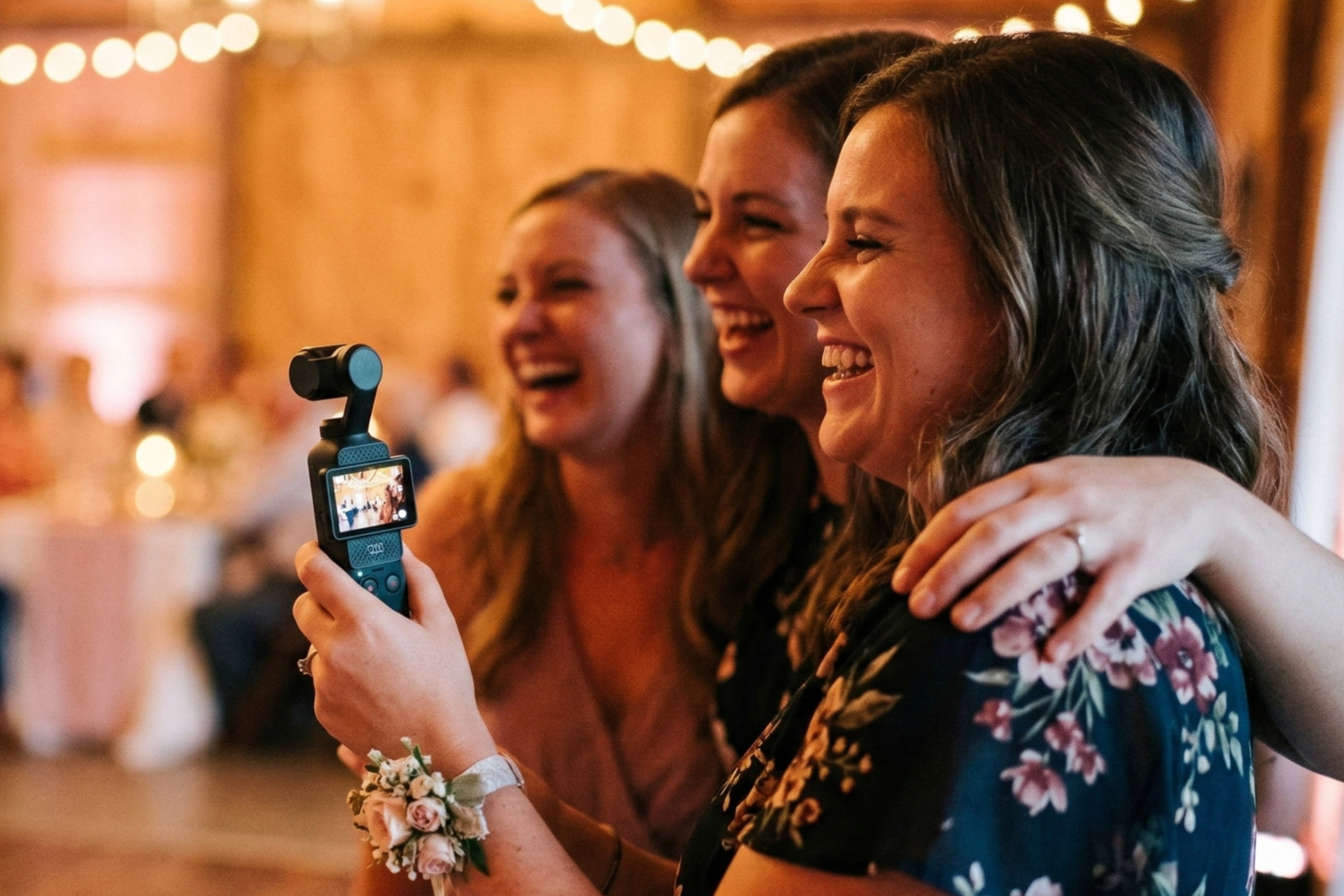
One of the biggest traps is inferior or limited equipment. If a videographer is using a single camera with no backup, one equipment failure means your memories are gone forever. At My Replay Kit, we’ve flipped this model. We provide professional-grade, easy-to-use equipment to your inner circle, ensuring that the cost you pay goes exactly where it matters most: The Editing.
3. You Aren't Paying for a Camera Operator; You're Paying for a Storyteller
A huge chunk of a traditional videographer’s fee goes toward labor for the day of the event. But the real "magic" doesn't happen on the dance floor—it happens in the editing room.
Most of the time you pay for isn't actually the filming; it’s the dozens of hours spent sorting through footage, color grading, and sound mixing. By utilizing your friends and family to capture the day, My Replay Kit allows your entire budget to be funneled into a highly polished, professional edit. You aren't paying for a stranger to stand in a corner with a tripod; you’re paying for a craftsman to turn your raw moments into a cinematic legacy.
4. Raw Moments vs. "TikTok" Shots
There is a fundamental difference between a cinematographer and your best friend. A professional videographer is often trying to capture their next viral TikTok clip or portfolio piece—which can lead to a "staged" feeling.
Your friends and family aren't trying to be "cinematic." They are trying to capture you. Because our equipment is designed for anyone to use, you get genuine, unscripted moments from the people who actually know and love you. That intimacy is something a $5,000 stranger simply cannot buy.
5. The Three-Viewing Rule
When couples ask me how much they should spend, I tell them to forget percentages and "market averages." Instead, use the Three-Viewing Rule.
Your investment should 100% justify itself across three specific moments:
The Premiere: The day you get the link and watch it for the first time.
The First Anniversary: When you sit down to celebrate one year of marriage.
The Legacy Date: Ten years (or more) in the future, when people have moved on, everyone is older, and you want to relive the voices and faces of the people you love.
Whether you spend $800 for a Replay Kit or $5,000 for a high-end cinematographer, if the film doesn't feel "worth it" during those three viewings, you spent too much. But if it brings those moments back to life? It was a bargain.